

IPTV Reseller Startup Costs UK figures vary far more by how you operate than most beginners expect, and the biggest expense usually isn’t the one people worry about first. Most new UK IPTV resellers assume the panel itself is the main cost, then get caught out by everything sitting around it: branding, payment handling, support time, and the credits they burn testing their own setup before a single customer signs up.
What You’re Actually Paying For
Reselling IPTV isn’t a single purchase. It’s a small collection of recurring and one-off costs that stack together, and the mix depends entirely on how seriously you’re building the operation. Someone running a side hustle from a WhatsApp number spends very differently to someone building a branded panel with sub-resellers underneath them.
Before anything else, separate the costs into two groups. There’s what you need to launch at all, and there’s what you need to launch properly. Conflating the two is where most budgeting mistakes start. You can technically begin with almost nothing beyond a small credit package and a messaging app, but that setup has a ceiling, and it’s a low one.
IPTV Reseller Startup Costs UK: The Core Numbers
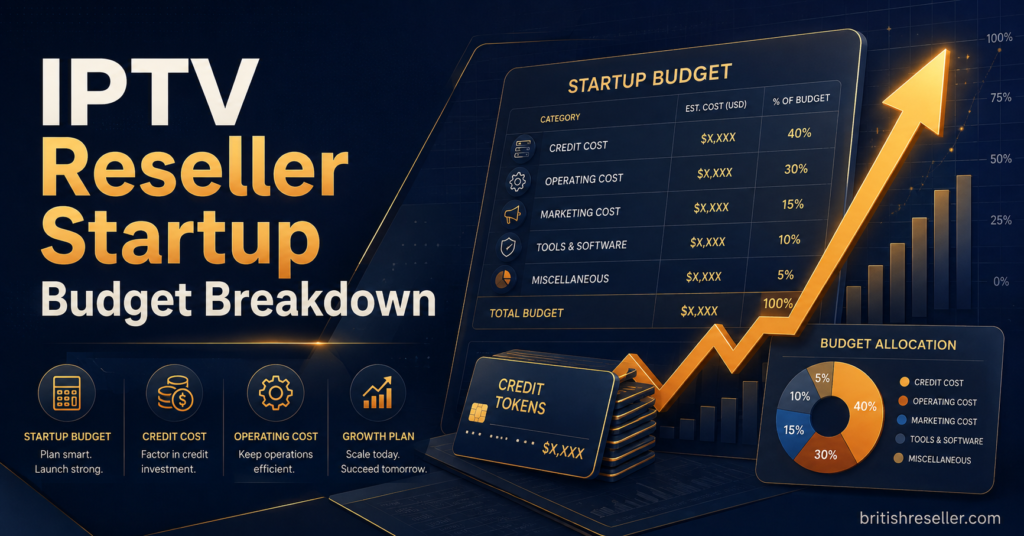
The bulk of your spending falls into a handful of categories. Exact figures shift with the provider and the scale you choose, so rather than quoting numbers that will be outdated within months, here’s what each category actually covers and why it matters.
Credits are the one line item everyone budgets for, and rightly so, since they’re the only cost tied directly to revenue. What catches people out is the second and third rows, because those are the costs that exist whether or not you make a single sale that month.
Where New Resellers Overspend
The most common mistake isn’t spending too much on credits. It’s buying a large credit package before there’s demand to justify it. Credits sitting unused don’t expire on most panels, but the cash spent on them is still cash you can’t use elsewhere while you’re building your customer base.
The second mistake is underestimating the cost of trust. A reseller working from a personal phone number with no website, no consistent branding, and no clear refund policy will struggle to convert cautious buyers, no matter how good the streaming quality is. That trust gap often costs more in lost sales than a modest website would have cost to build.
Pro tip: Start with the smallest credit package that lets you serve your first handful of confirmed customers, not the package that looks like the best per-credit value. You can always top up once demand is proven.
Costs That Scale With How Seriously You Operate
There’s a meaningful difference between running a casual side operation and building something closer to a proper small business. The table below breaks down the two approaches, not as a recommendation of one over the other, but so you can see where the line sits.
A bare-bones operation runs on a small credit package, a personal messaging app for orders, and manual record-keeping in a spreadsheet. It works, and plenty of resellers stay at this level indefinitely, particularly if they’re serving a small, known circle of customers.
A structured operation adds a proper website, a dedicated business number, a payment method that isn’t tied to a personal account, and often a sub-reseller structure once volume grows. Each of those additions has a cost, but each also removes a bottleneck that eventually limits how far the bare-bones version can scale.
The Website and Branding Question
Not every reseller needs a website to start, but every UK IPTV Panel reseller eventually runs into its absence as a limitation. Customers researching before they buy tend to trust a proper site with clear pricing, a refund policy, and contact details far more than a cold WhatsApp message from an unfamiliar number.
If you do build one, the ongoing cost is usually modest: a yearly domain renewal and a small monthly or annual hosting fee, both of which are minor compared to what a single lost sale from a hesitant buyer would have cost you. You don’t need a custom design agency for this. A clean, simple site that clearly explains what you offer and how billing works does the job.
Pro tip: If budget is tight, prioritise a clear refund policy and transparent pricing page over visual polish. Buyers researching an unfamiliar reseller look for those two things specifically before they trust anyone with payment details.
Support and Time Costs Nobody Budgets For
Time is a cost, even when no money changes hands. Answering setup questions, troubleshooting a customer’s device, chasing a renewal, and handling the occasional dispute all take time that scales with your customer count. This isn’t a reason to avoid growing, but it’s worth planning for before you’re doing it at 11pm on a work night.
Resellers who plan to scale past a handful of personal customers usually reach a point where a proper reseller panel dashboard earns back its cost quickly, simply because bulk actions, credit logs, and organised user management cut the time spent on routine admin dramatically compared to managing everything manually.
Costs That Depend on Scale, Not Choice
Some costs aren’t optional decisions so much as consequences of growth. Once you’re managing dozens of customers, manual tracking in a notes app or spreadsheet stops being sustainable, and the time lost to disorganisation becomes its own hidden cost. At that point, a proper dashboard with credit logs, bulk editing, and user visibility isn’t a luxury purchase, it’s what keeps errors and missed renewals from eating into your margin.
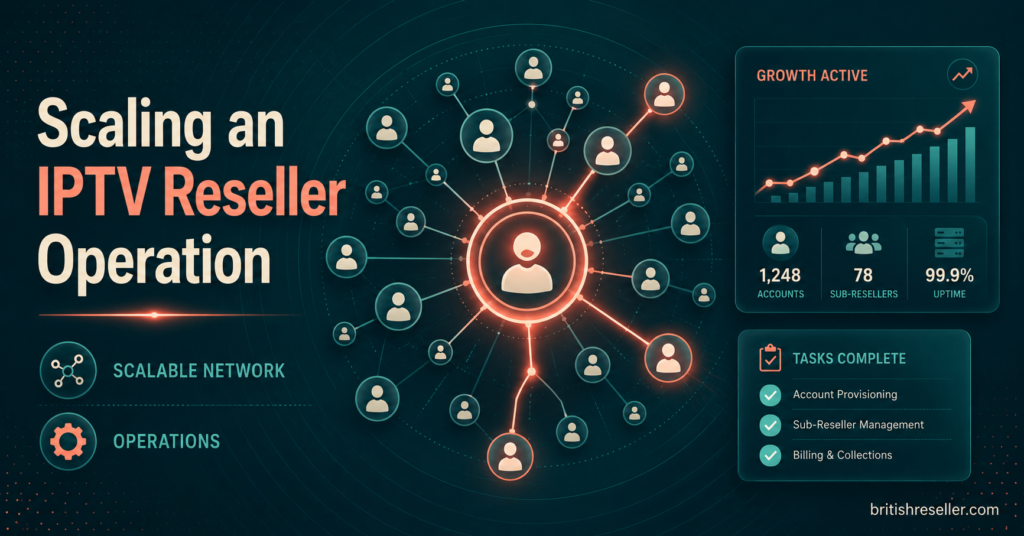
Sub-reselling introduces a different kind of cost calculation. Handing credit pools to sub-resellers means trusting them with part of your margin and your reputation, so the real cost isn’t just the credits assigned to them, it’s the oversight required to make sure their customer service reflects well on your operation.
Pro tip: Track your cost per active customer monthly, not just your total spend. It’s the number that actually tells you whether growth is improving your margin or just adding more work for the same return.
How to Set a Realistic First Budget
Rather than picking an arbitrary figure, work backwards from your first month’s realistic customer count. If you genuinely expect five to ten customers in your first month, buying credits for fifty is money sitting idle. Start smaller than feels ambitious, prove the demand, then reinvest.
Factor in a small buffer beyond credits for the basics: a way to take payment that separates business and personal money, and a simple way to track who’s paid, when their line expires, and when they’re due for renewal. These aren’t glamorous costs, but skipping them is usually what turns a manageable side operation into a chaotic one within a few months.
Frequently Asked Questions
Do I need a website to start reselling IPTV in the UK?
No, not to begin. Many resellers start with just a credit package and a messaging app for orders. A website becomes more valuable once you’re trying to attract customers beyond personal referrals, since it builds trust with people who don’t already know you.
What’s the single most avoidable startup cost?
Buying a large credit package before you have confirmed demand. Unused credits tie up cash without generating any return, and it’s far easier to top up once you have real customers than to have spent too much upfront.
Is sub-reselling worth the added cost for a beginner?
Usually not immediately. Sub-reselling adds oversight responsibilities and shared reputational risk before most beginners have a stable enough customer base of their own to justify managing a second layer of accounts.
How much should I set aside for payment processing?
This depends entirely on the method you choose and changes often enough that quoting a fixed figure here would be misleading. Check current rates directly with whichever payment method or processor you’re considering before committing.
Can I run this as a side business without major upfront investment?
Yes. A small credit package, a dedicated business messaging number, and a simple way to track customer renewals are enough to start. The larger costs, like a proper website or a full reseller dashboard, tend to make more sense once volume justifies them.
Pre-Launch Budget Checklist
- Confirm your realistic first-month customer count before buying credits
- Choose a credit package sized to that number, not the best per-credit rate
- Set up a payment method separate from personal banking
- Decide whether a website is needed now or can wait until demand grows
- Write a clear, simple refund policy before your first sale
- Set up a basic system for tracking renewals and expiry dates
- Review current credit pricing before committing to a package size
- Revisit your budget after the first month once real numbers replace estimates
Conclusion
IPTV Reseller Startup Costs UK don’t come down to one number, they come down to how deliberately you match spending to actual demand. Credits are the only cost tied directly to revenue, while everything else, from a website to a payment method to support time, is really about how sustainable your operation is once customers start relying on you. Start smaller than feels ambitious, track what you’re actually spending against what you’re bringing in, and scale the parts of your setup that are genuinely limiting you rather than the parts that simply look impressive. If you’re still comparing dashboards and credit structures before committing, the IPTV reseller panel guide and panel feature breakdown are worth reading before you spend