

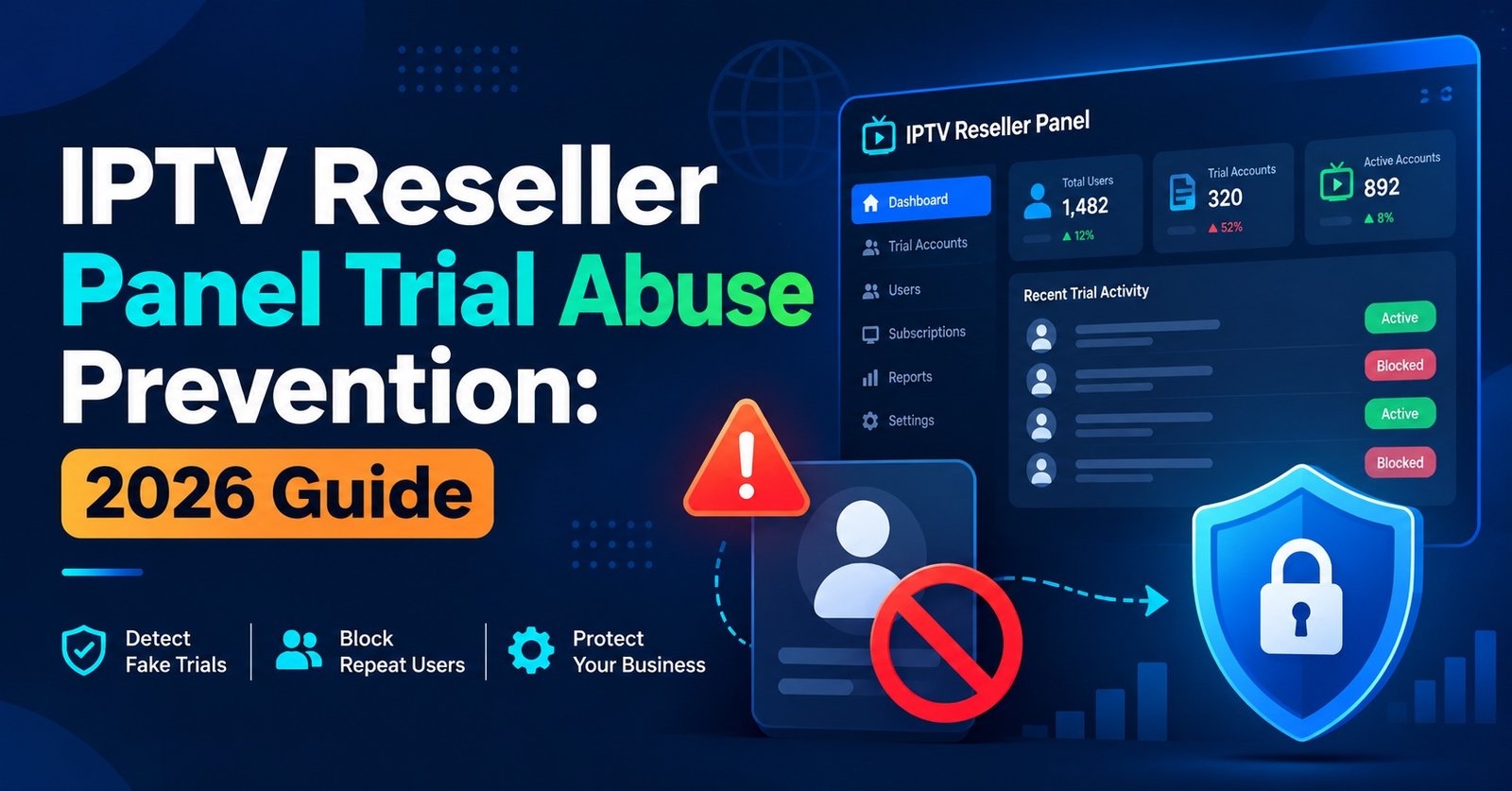
IPTV Reseller Panel Trial Abuse Prevention works best as a short set of rules applied to every request: one trial per person within a period you choose, the shortest duration your panel allows, a single connection, and a written record of who received the trial and what happened next. Most of the protection comes before the trial line exists, when you check the request against your own trial log instead of expecting the panel to spot repeat requests for you.
Abuse rarely looks dramatic. Usually it is the same household asking again from a new number, a trial login passed around a group chat, or a sub-reseller handing out free test lines as though they were a product. You want those patterns to be visible and awkward to repeat, while the first trial stays quick for a genuine buyer. A control that frustrates real prospects can cost more in lost sales than the trials it stops.
What Trial Abuse Looks Like From Inside the Panel
A reseller dashboard records lines, creation times, expiry dates and, on many panels, some connection activity. One suspicious line tells you very little. Abuse shows up as a pattern across several records, which is why a log matters more than any single setting.
| Pattern | What usually gives it away |
|---|---|
| Serial trialist | New contact details, but the same name, area, device or message wording as an earlier request |
| Trial chaining | A fresh request arriving within hours of the previous trial expiring |
| Shared trial login | Connection-limit errors or repeated attempts on a one-connection line, where your panel shows activity |
| Sub-reseller leakage | A sub-account with many trial lines and very few paid ones |
| Scripted form requests | A batch of website form submissions with throwaway email addresses and identical text |
| Competitor scouting | Detailed questions about your provider, panel and wholesale costs, with no interest in setup |
Panels differ in what they expose, so check which of these signals yours actually shows before building your process around it.
On many panels, trial lines do not use credits. The British Reseller trial generator and access controls work this way, for instance. That makes abuse feel harmless, but the cost moves elsewhere: support time spent setting up devices for people who never buy, connection capacity on the provider’s side, and a conversion rate you can no longer trust when deciding whether your marketing works. Where a provider charges for trials or caps how many you can create, abuse becomes a direct cost on top of that.
Set the Trial Policy First, Then Configure the Panel
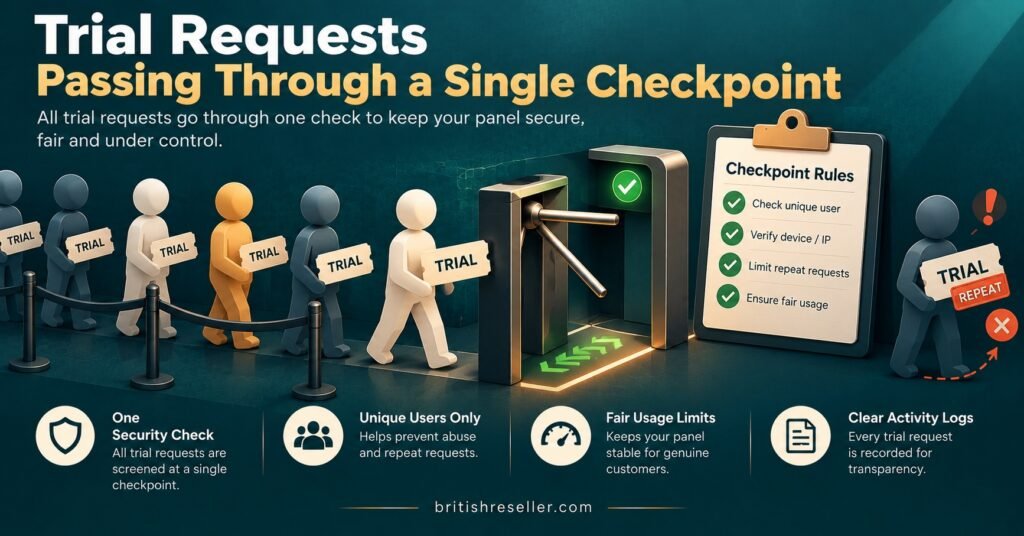
A panel cannot enforce a rule you have not decided. Write a short trial policy, no longer than a few lines, that you would be comfortable sending to anyone who asks. It should settle:
- Eligibility: one trial per person or household within a period you set. Many resellers choose months rather than weeks.
- Length: the shortest period that proves the service works on the customer’s own device.
- Connections: one, without exception.
- Request route: a single channel, such as your website form or one messaging number, so every request lands in the same log.
- Information collected: a name, one contact method and the device they will use. Nothing more.
- Expiry: the line expires automatically, followed by one follow-up message from you.
Resist the urge to demand identity documents or card details for a free trial. Under UK GDPR you should collect only the personal data you genuinely need for the purpose, and a passport photo is not needed to check whether someone has already had a trial. Keep trial records only for as long as your one-trial rule requires, then delete them. The British Reseller guide to UK GDPR duties for IPTV panel resellers covers retention and controller responsibilities in more detail.
One further point belongs in the policy, even if only for your own clarity. A trial demonstrates the service you sell, so it should only ever demonstrate a service you are authorised to resell. IPTV is a delivery technology, and lawful use depends on the content being properly licensed. Tight trial controls do nothing to fix an unlicensed source.
IPTV Reseller Panel Trial Abuse Prevention, Step by Step in the Dashboard
The workflow below fits most panels, because it relies on the log and on basic line settings rather than on any special anti-abuse feature.
- Log the request before you reply. Record the date, request route, name, contact method and device. Doing this first stops busy evenings from producing unrecorded trials.
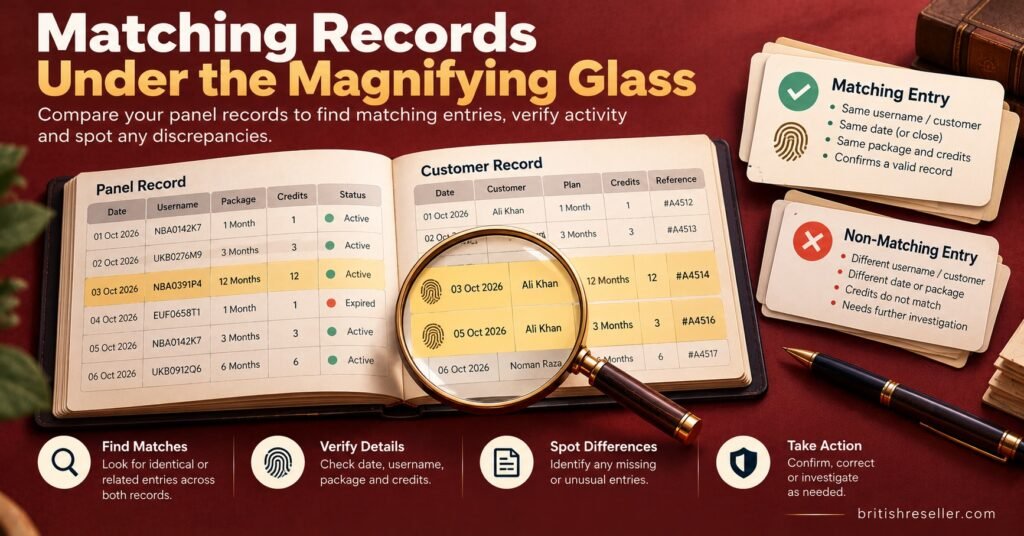
- Search the log, not only the panel. Check the phone number, email address and name, including partial matches such as the same surname with a different email. Some panels remove expired trial lines after a while, so the user list is not a dependable history.
- Create the line with a traceable username. A pattern such as tr-2610-jm-01 (trial, date, initials, sequence) lets you link any line back to its log entry. Avoid names like trial1 or test, which tell you nothing a month later.
- Apply the limits. One connection, the shortest duration available, and nothing beyond what the prospect needs to judge the service. If the panel has a notes field, add the log reference and request route.
- Send the credentials privately. State the expiry time in plain words and add a line saying the login is for one device only.
- Follow up once before expiry. Ask whether it worked on their device and offer to set up a paid line. A trial without a follow-up is just a free sample, and free samples invite people to come back for another.
- Close the record. Mark the outcome as converted, no reply, declined or flagged.
- Review weekly. Count trials issued, conversions, repeat requests refused and trial totals per sub-account.
Pro tip: If your panel lets you assign trial lines to a separate package, group or tag, use it. Filtering trials away from paid lines in one click makes the weekly review take minutes, and it can sit alongside your routine expiry and renewal tracking rather than becoming another job.
Worked Example: One Week of Trial Records
The records below are illustrative and use invented initials, but they show how a log turns guesswork into a clear decision.
| Trial line | Request details | Outcome |
|---|---|---|
| tr-0610-sa-01 | Mon, website form, smart TV, email contact | Converted to a one-month line (1 credit used on the paid line) |
| tr-0710-jm-02 | Tue, messaging number, Android TV box | No reply after follow-up; closed |
| None issued | Wed, website form, new email, same name and area as jm-02 | Declined politely; paid month offered |
| tr-0810-lr-03 | Thu, messaging number, phone app | Connection-limit error next day; partner tried a second device. Explained the one-device rule; converted to a two-connection line |
| None issued | Fri, six form submissions in ten minutes, disposable addresses, identical text | Not issued; form protection added |
Read as a week, the log shows three trials issued, two conversions, one repeat request refused and one scripted batch stopped. Only the two paid lines touched the credit balance, and the panel’s credit history should show exactly those two deductions. If it shows more, something was created outside the process.
The Thursday line is worth noticing. A second device on a trial looks like abuse at first glance, but here it was a household testing together, and it ended in a larger sale. The log let you see the whole picture before reacting.
Sub-Resellers and the Trial Button
When you give a sub-reseller their own dashboard, their trial lines still run on the same provider and still reflect on your business. If their trials leak, it is your exposure as much as theirs.
Where your panel supports it, use access controls to restrict or cap trial creation per sub-account, rather than leaving the button open by default. Ask each sub-reseller to use the same naming pattern and to keep their own log in the same format, so you can compare like with like. Each month, look at the ratio of trial lines to paid lines for every sub-account. A sub-reseller whose trials keep rising while paid lines stay flat is either struggling to sell or using trials as giveaways, and both deserve a conversation.
Put the rule in writing as part of your sub-reseller terms: trials are for prospective customers only, are never sold or bundled as free time, and follow the one-trial policy. Having it written down makes it far easier to enforce later.
Mistakes That Quietly Undo the Controls
Generic trial usernames. Lines called trial1 or demo cannot be traced back to a request, so a shared or reused login has no owner in your records.
Generous defaults. A long trial with several connections is a free subscription for a small household. Set the defaults once, at the tightest sensible level.
Treating the panel as your history. If expired trials disappear from the user list, so does the evidence of who has already had one.
Assuming every repeat is fraud. A first trial that failed because of a setup problem, or a household member asking separately, is not abuse. Allow one documented exception and note the reason in the log.
Asking for too much information. Identity documents and card details for a free trial put off genuine buyers and create data you then have to protect.
Posting credentials where others can see them. Group chats, public comments and shared inboxes are how trial logins end up with strangers.
Skipping the follow-up. Without one, the trial has no sales step, and the prospect learns that the next move is simply to ask again.
Bypassing the log when you are busy. The evenings with the most requests are when a skipped entry costs most.
Turning Down a Repeat Request Politely
Decline briefly, without accusing anyone, and offer a paid route straight away. Something like this works well:
“Thanks for getting back in touch. Our records show a trial was set up for you recently, and we offer one per customer. If you’d like to continue, I can set up a one-month line today and help you get it working on your device.”
That wording states the rule, avoids a debate and keeps the door open. If the person does convert, keep their trial entry with the paid record. A clear trail of request, trial, follow-up and activation is useful evidence if a payment is ever disputed, which the guide to reducing chargebacks as a UK IPTV panel reseller explains further.
Trial Control Checklist to Reuse
- Trial policy written and sent to every requester
- One request route, feeding one log
- Log searched by phone, email and name before any line is created
- Username follows the date and initials pattern
- One connection and the shortest available duration set
- Log reference added to the panel notes field
- Credentials sent privately, with the expiry time stated
- One follow-up sent before expiry
- Outcome recorded when the trial closes
- Sub-account trial totals compared with paid lines each month
- Old trial records deleted once the eligibility period has passed
Questions Resellers Ask About Trial Limits
Can I block repeat trials by IP address?
IP addresses are an unreliable test on their own. Mobile networks and some broadband providers share addresses between many customers, and a home address can change. Use IP information, where your panel shows it, as one signal alongside your log rather than as a rule.
Do trial lines use credits?
That depends on your provider. Many panels create trial lines at no credit cost, while others charge or cap them. Check your provider’s terms and your credit history after creating a test trial.
How long should a trial be?
Long enough for the customer to install the app, log in and confirm the service runs smoothly on their device. For most people that takes hours, not days. Your provider may fix the available lengths.
Should I ask for ID before issuing a trial?
No. It is disproportionate for a free trial and adds data protection obligations. A name, one contact method and the device type are enough to apply a one-trial rule.
What if a sub-reseller keeps ignoring the trial rules?
Restrict or remove their trial permission in the panel if it allows, refer back to your written terms, and review their trial-to-paid ratio again the following month before deciding whether the arrangement should continue.
Keeping Trials Useful
IPTV Reseller Panel Trial Abuse Prevention is less about catching people out than about making every trial traceable. A written policy, one log, a consistent naming pattern and a single follow-up deal with most repeat requests before they cost you support time, while still letting genuine buyers test the service quickly. What a panel can show varies between providers, so spend ten minutes this week checking which signals yours exposes, then set your defaults and start the log before the next request arrives.
[…] panel offers every control below, and some name them differently. This is the practical set most IPTV panel resellers end up dealing […]