

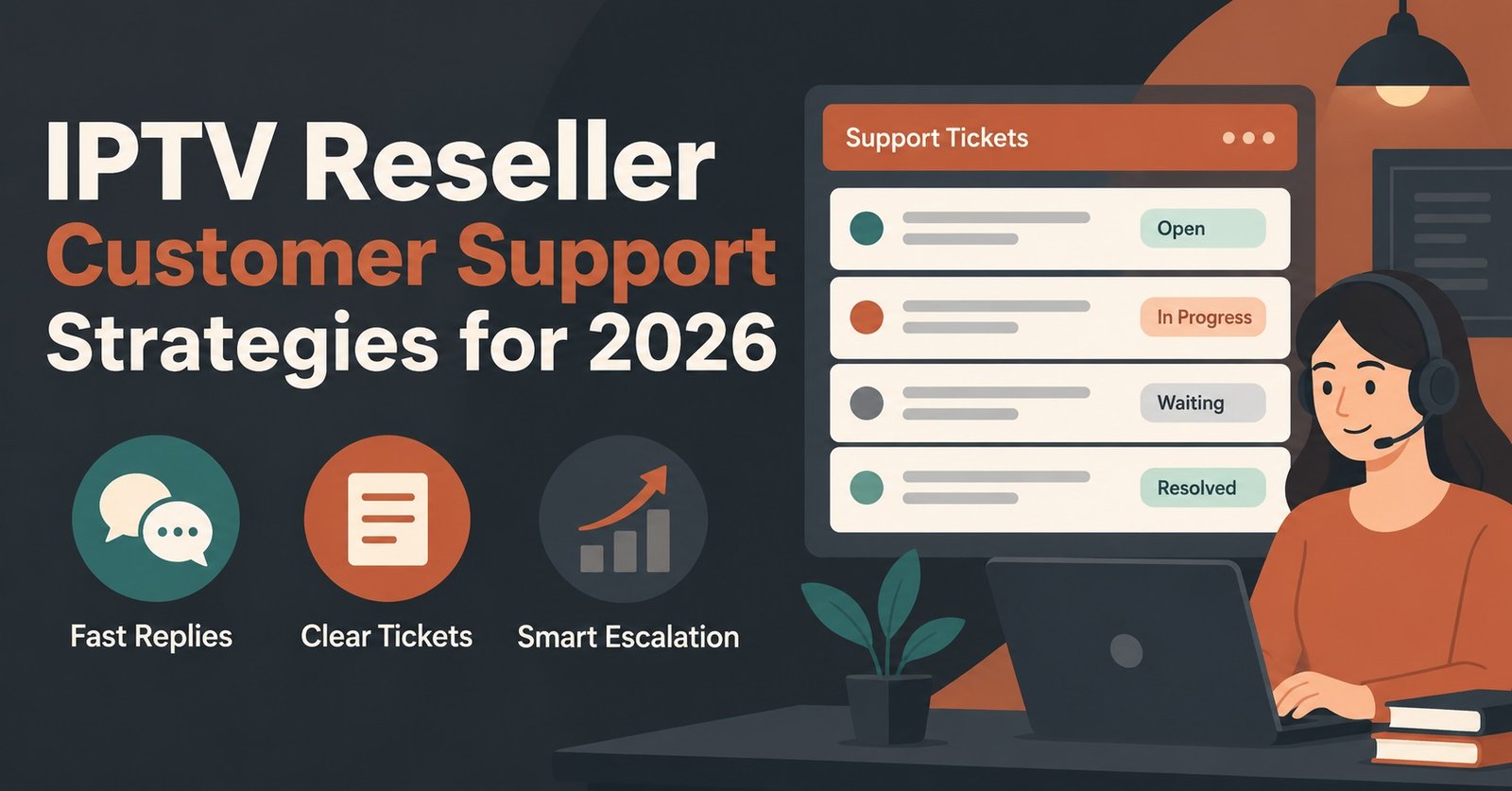
IPTV Reseller Customer Support actually covers two separate relationships: the help your panel provider gives you when something breaks, and the support you personally deliver to the customers who buy lines from you. Confusing the two is where most new IPTV Panel resellers get caught out. Your provider isn’t responsible for explaining to your customer why their Firestick app keeps buffering, and your customer doesn’t care whose backend the fault sits on. Getting clear on where one job ends and the other begins is the first practical step to running a reselling operation that doesn’t collapse under its own support load.
What Your Panel Provider Should Actually Be Responsible For
A provider’s support desk exists to keep the infrastructure underneath your business working, not to babysit your individual customers. That distinction matters because it defines what you can reasonably escalate and what you’re expected to sort out yourself.
Realistic provider responsibilities include server uptime and stream stability, credit and billing issues, dashboard bugs, panel-level authentication problems, and technical guidance during onboarding. If a line won’t activate despite showing correct credit deduction, that’s a provider issue. If your customer typed their password wrong three times, that’s yours.
Response speed is the other half of the equation. A provider that takes two days to answer a ticket during a live outage leaves you fielding angry messages from your own customers with nothing useful to tell them. Before committing credits to any panel, it’s worth testing their support during the free trial period rather than after you’ve already got paying subscribers depending on it.
Pro tip: Send a genuinely technical question to a provider’s support channel during your trial, not a generic “does this work” message. How specifically they answer tells you more than how fast they reply.
IPTV Reseller Customer Support: What Separates a Reliable Provider From a Slow One
Not every support desk that claims 24/7 availability actually delivers useful answers around the clock. The difference usually shows up in the details rather than the marketing copy.
| Warning sign | Why it matters |
|---|---|
| Generic copy-paste replies to specific technical questions | Suggests support staff can’t actually see backend data |
| No stated response time anywhere on the site | Makes it impossible to plan for outages |
| Support only available through a single channel | One dead channel means zero support until it’s fixed |
| Tickets closed without resolution confirmation | Issues resurface later without warning |
| No escalation path for urgent outages | Leaves resellers stuck during peak demand |
A provider worth staying with usually publishes an approximate response window, offers more than one contact method such as ticketing alongside WhatsApp, Telegram or Discord, and has staff who can pull up your account and line data directly rather than asking you to describe the problem three different ways.
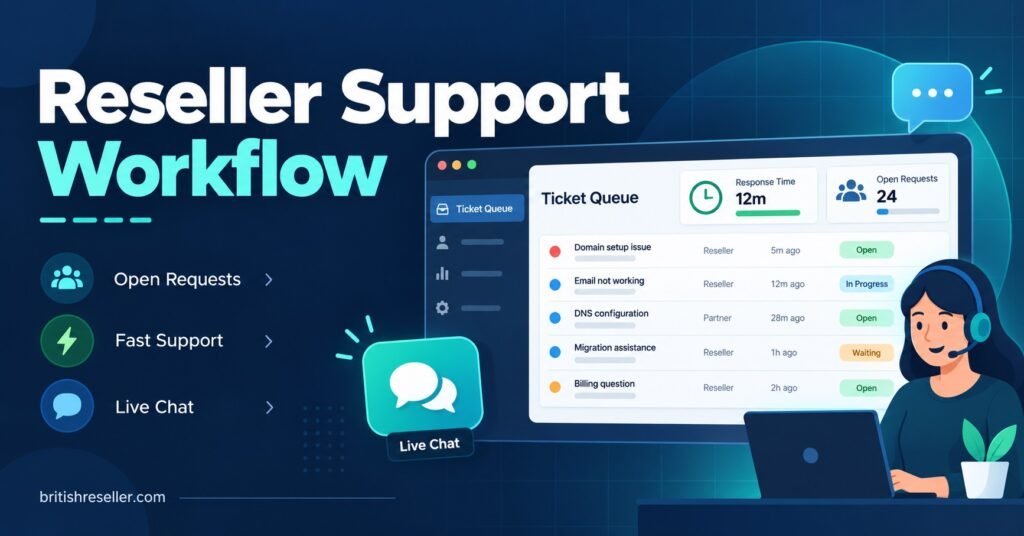
Building Your Own Support Process for Subscribers
Once the provider relationship is sorted, the harder part starts: supporting the people who actually pay you. This is where most of your daily time goes, and it’s entirely your responsibility, not the panel’s.
Start with a single, consistent channel for customers to reach you. Splitting support across WhatsApp, email and a Facebook page sounds flexible but usually means messages get missed. Pick one primary channel and make it clear when you’re available.
Keep a short internal reference of common fixes so you’re not diagnosing the same buffering complaint from scratch every time. Device restarts, app reinstalls, checking the customer’s own internet speed, and confirming their subscription hasn’t expired resolve a large share of tickets before anything needs escalating upward.
Pro tip: Draft two or three template replies for your most frequent issues, then personalise the first line each time. It saves time without sounding like a bot to the customer.
Common Support Requests You’ll Handle Daily
Most IPTV reseller panel support tickets fall into a small number of repeating categories, and knowing them in advance means faster, calmer responses.
Buffering and playback complaints are the most frequent, and the cause is nearly always the customer’s own connection, their device’s app cache, or peak-time network congestion rather than the service itself. Credential issues come next, usually a forgotten password or a customer who’s switched devices and needs their line reactivated on new hardware. Renewal confusion is common too, particularly when a customer doesn’t realise their subscription length is approaching its end.
Device compatibility questions also come up regularly, especially from customers moving from one type of hardware to another. Having a short setup guide ready for the most common devices your customers actually use saves repeating the same instructions individually.
Sub-Reseller Considerations
If you’re running sub-resellers under your own account, support responsibility gets a layer more complicated. Decide upfront whether sub-resellers handle their own customer tickets entirely or whether certain technical issues get passed up to you. Leaving this undefined tends to create confusion exactly when a customer is already frustrated, which is the worst moment to be figuring out whose job it is.
When to Escalate to Your Panel Provider
Escalate when the problem sits below your own visibility, meaning anything involving server-side stability, credit balances not reflecting correctly, panel login failures, or a line that won’t activate despite everything on your end looking correct. Provide specifics when you do: the line details, timestamps, and exactly what you’ve already tried. Vague escalations get vague answers, and a provider that can’t see enough detail will just bounce the question back to you.
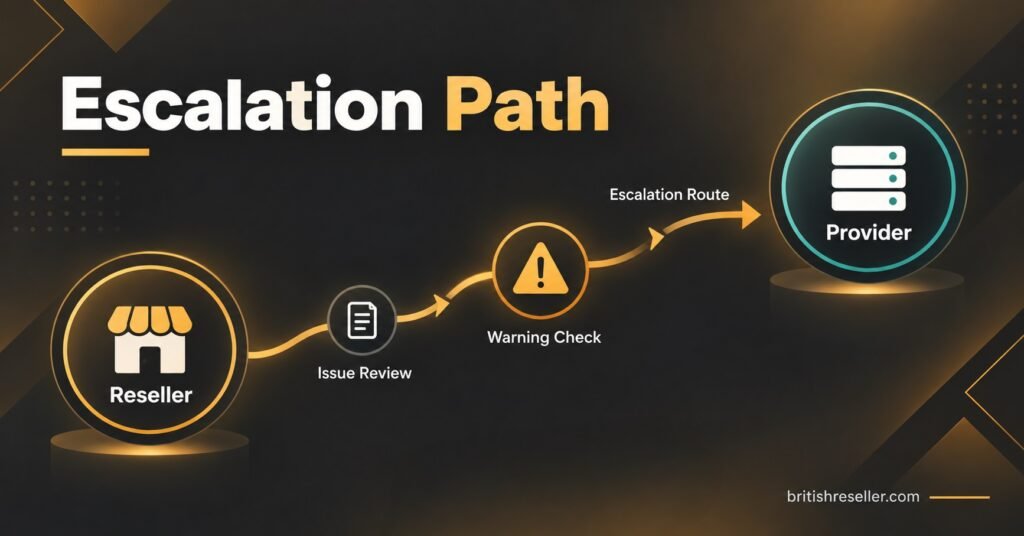
Pro tip: Keep a simple log of recurring provider-side issues. If the same type of fault keeps coming back, it’s worth raising directly rather than treating each occurrence as a one-off.
Frequently Asked Questions
Is a provider responsible for fixing my customer’s buffering issue?
Only if the cause is on their end, such as server congestion or a stream fault. Most buffering complaints trace back to the customer’s own connection or device, which sits within your responsibility as the reseller.
How fast should provider support respond during an outage?
There’s no universal standard, but a provider that goes a full day without acknowledging a live outage is leaving you exposed. Look for a stated response window before committing credits.
Should I give customers direct access to my provider’s support desk?
Generally no. Your customers bought a service from you, not from your provider, and routing them elsewhere undermines the relationship you’re trying to build with them.
What’s the fastest way to reduce my own support workload?
A short internal troubleshooting reference for the most common issues, plus template replies you personalise per customer, cuts response time significantly without sacrificing quality.
Do sub-resellers need their own support process?
Yes. Without a clear agreement on who handles which tickets, sub-reseller customers end up caught between two people neither of whom takes ownership of the issue.
Reseller Support Checklist
- Confirm your provider’s stated response times before purchasing credits
- Test provider support with a specific technical question during your free trial
- Pick one primary channel for your own subscriber support
- Keep a short troubleshooting reference for recurring issues
- Prepare basic device setup guidance for common hardware
- Define escalation rules with any sub-resellers in advance
- Log recurring provider-side faults instead of treating each as isolated
- Confirm exactly what falls under your responsibility versus your provider’s
Conclusion
IPTV Reseller Customer Support only works when both halves of it are clearly defined: what your provider owes you, and what you owe your own customers. Providers should be judged on response speed, escalation clarity and whether their staff can actually see your account data, which you can test properly during a free trial such as the one offered through the IPTV reseller panel guide on britishreseller.com.
On your side, a single consistent support channel, a short troubleshooting reference, and clear rules for any sub-resellers will handle most of what comes up day to day. For recurring technical issues like playlist loading problems, having a ready answer before a customer asks is what actually separates a smooth-running reseller operation from one that’s constantly firefighting.